Millions of people struggle with obstructive sleep apnea (OSA), and prevalence rates are increasing. OSA can be challenging to manage, but your sleeping position can have a direct impact on your OSA, leading to improved snoring, comfort and sleep quality. Let’s discuss the best—and worst—sleep positions for those suffering from OSA.
What Happens with Obstructive Sleep Apnea?
Sleep apnea occurs when your breathing is obstructed during sleep. This interrupted breathing can cause snoring, gasping for air, insomnia and frequent waking up in the middle of the night, leading to poor sleep quality and fatigue during the day.
There are two types of sleep apnea: obstructive sleep apnea and central sleep apnea (CSA). CSA occurs when the brain fails to send signals to the muscles that control breathing. OSA occurs when your tongue, palate and other muscles and tissues at the back of your throat relax and physically obstruct your airways. We’ll be discussing OSA in this article.
How Does Sleep Position Affect Obstructive Sleep Apnea?
OSA is caused by the muscles in the back of the throat falling backward and blocking your airways. Your sleep position can help by positioning those muscles in a way that allows them to fall in another direction, thereby lessening the obstruction. Finding the best position can significantly reduce symptoms of OSA.
What Sleep Position Helps with Obstructive Sleep Apnea?
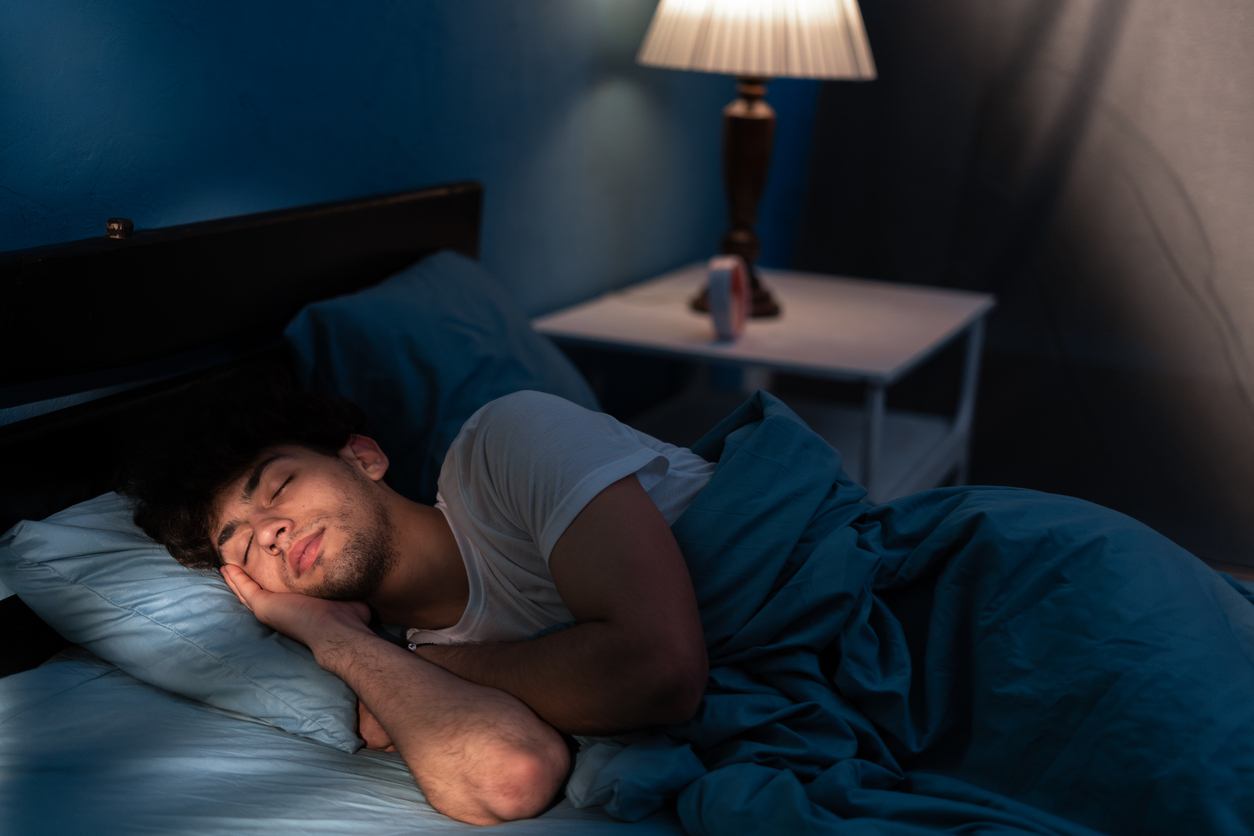
Experts agree that sleeping on your side, also known as a lateral sleeping position, is the most effective position for OSA. When your tongue and muscles relax while you sleep, they fall where gravity takes them. When you sleep on your side, they won’t fall back into your throat and block your airways.
Sleeping on either the left or right side will make a difference in OSA, but there are some minor differences between the two sides. Sleeping on your right side can help improve blood flow to and from the heart, since your heart is on the left side of your body. Sleeping on your left side can help with chronic acid reflux (GERD) due to the shape and tilt of your stomach. However, both will positively affect OSA and your sleep quality.
Conversely, sleeping on your back is considered the worst position for OSA. As stated above, gravity influences your tongue and soft tissues; when you sleep on your back, they fall backward, right into the throat. Sleeping on your stomach won’t exacerbate OSA to the same degree as back-sleeping, but it can put a strain on your spine and neck, which also isn’t optimal.
Can Head Position Make a Difference?
Regardless of your preferred sleeping position, you can also mitigate OSA by elevating your head while sleeping. Raising your head keeps your airways open and reduces the weight on your neck. Put an extra pillow under your head and aim to have your head in alignment with your neck and spine.
When to Seek Medical Help
Mitigation of sleep apnea can vary from person to person. You may see major increases in your sleep quality simply by changing your sleeping position, and that’s great! If that isn’t providing the relief you need, it may be time to discuss treatment options with a sleep specialist. Call Southwest Idaho Ear, Nose and Throat today to find out more.